


Can I take a gluten allergy test at home?
Yes, you can do a gluten allergy test at home with a self-test that detects antibodies in your blood. This test measures whether your body has an immune response to gluten, which may indicate celiac disease. A home test is easy to perform and gives a result within 10 to 15 minutes.
How does a home gluten allergy test work?
A home gluten allergy test works by measuring tissue transglutaminase (tTG-IgA) antibodies in your blood. These are antibodies that the body produces in response to gluten and can be a strong indicator of celiac disease.
The testing procedure is simple and usually consists of four steps:
- Clean your fingertip with an alcohol swab and use a lancet to obtain a drop of blood.
- Use a pipette to apply the blood to the test cassette.
- Add a few drops of buffer solution to the test cassette.
- Wait 10-15 minutes and read the result.
How reliable is a home gluten allergy test?
Home tests for gluten intolerance are clinically validated and can give a good initial indication of whether you have celiac disease. Most self-tests have high sensitivity and specificity, meaning they are accurate in detecting antibodies.
Still, there are some limitations:
- False-negative results can occur if you have been on a gluten-free diet for a long time. This is because your body may then no longer produce tTG-IgA antibodies.
- False-positive results are rare but can occur in other autoimmune diseases.
A home test is not a definitive diagnosis. In case of a positive result, it is always recommended to consult a doctor for further investigation.
When is a gluten allergy home test useful?
A home test is useful if you regularly experience digestive symptoms, fatigue or skin problems after eating gluten. It can also be useful if you have family members with celiac disease, as the disease has a hereditary component.
However, if you have been eating gluten-free for a long time, a self-test may be less reliable. In that case, a doctor may perform a blood test or intestinal biopsy to make a definitive diagnosis.
What should you do after a positive test result?
If a home test indicates that you have tTG-IgA antibodies, it means you may have celiac disease or gluten intolerance. It is important to contact a GP or specialist for follow-up testing. This may include:
- A comprehensive blood test to measure other antibodies.
- An intestinal biopsy to determine the extent of intestinal damage.
Conclusion
A gluten allergy test can be done at home and provides a quick indication of whether your body is producing antibodies to gluten. Although reliable, the test cannot provide a definitive diagnosis. A positive result requires further medical tests to diagnose celiac disease.
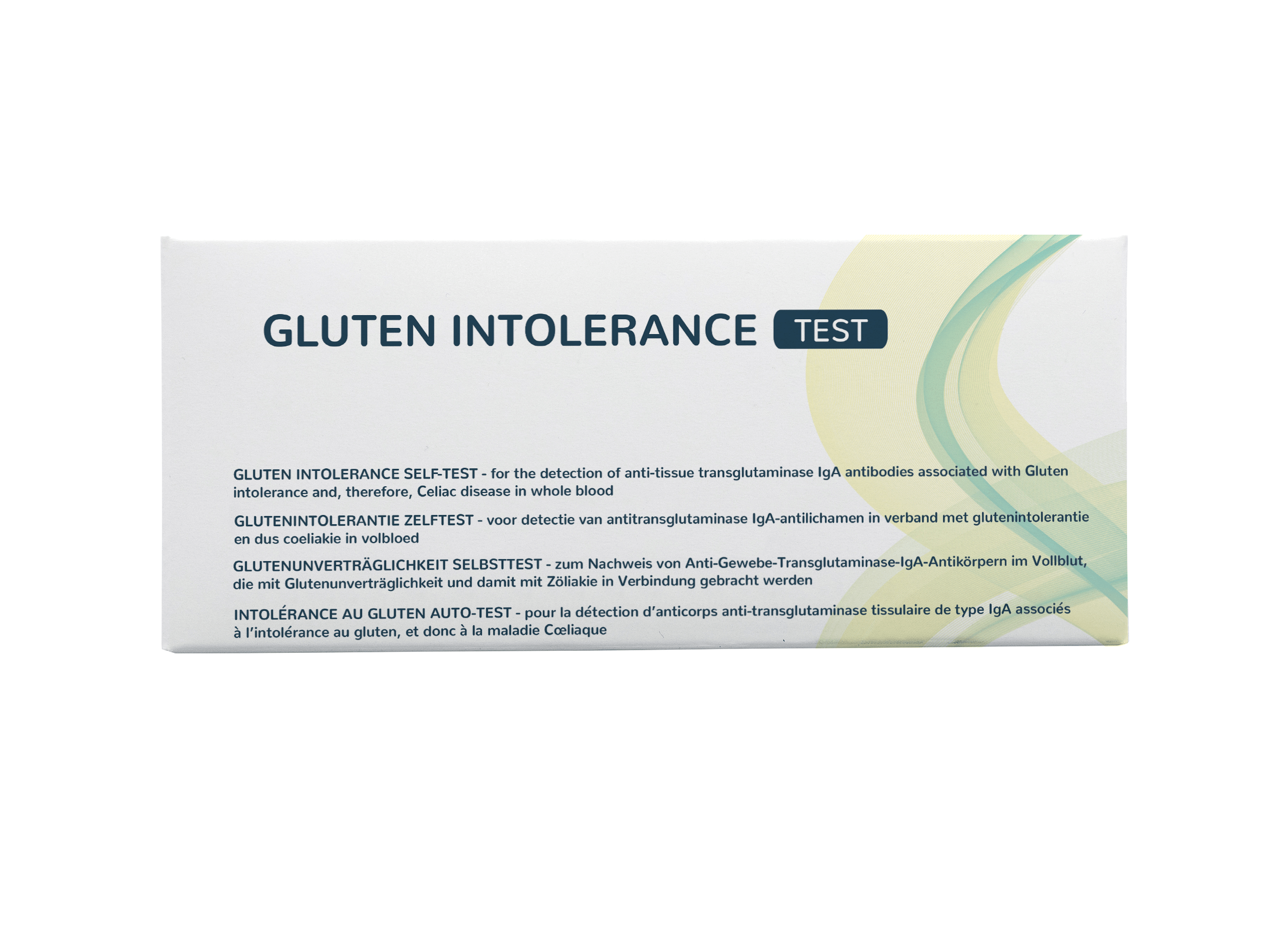
Gluten allergie test
€19.99


