


How reliable is a gluten allergy test?
A gluten allergy test is a quick way to check whether your body is making antibodies to gluten, but how reliable is this test? The reliability of a gluten allergy test depends on several factors, including the sensitivity and specificity of the test and whether the test is performed correctly.
What does a gluten allergy test measure?
A gluten allergy test detects tTG-IgA antibodies in the blood. These antibodies are produced by the immune system in response to gluten and are a strong indicator of celiac disease. An elevated value can indicate gluten intolerance, but a negative result does not always completely rule out celiac disease.
How accurate is a gluten allergy test?
The accuracy of a gluten allergy test is determined by two main factors:
- Sensitivity: This indicates how well the test correctly identifies a person with celiac disease. Most clinically validated gluten allergy tests have a sensitivity of 97%, meaning that only a small percentage of true cases are not detected.
- Specificity: This indicates how well the test prevents someone without celiac disease from falsely getting a positive result. Most tests have a specificity of 96%, meaning almost all negative results are correct.
When is a gluten allergy test less reliable?
Although the test is very accurate, there are some situations in which reliability may decrease:
- If you already eat gluten-free: The test measures antibodies that are only produced when you ingest gluten. If you eat gluten-free for more than two months, the antibodies may no longer be measurable, and the test may give a false-negative result.
- For IgA deficiency: about 2-3% of people with celiac disease have IgA deficiency, meaning their body does not produce tTG-IgA antibodies. In this case, the test may falsely come out negative.
- If the test is performed incorrectly: Home tests should be performed accurately according to the instructions. Insufficient blood collection or incorrect use of the buffer solution can affect the result.
How does a self-test compare to a laboratory test?
A laboratory test at the GP’s or specialist’s office measures not only tTG-IgA, but often also EMA-IgA (endomysial antibodies) or DGP-IgG (deamided gliadin peptide antibodies). In addition, if in doubt, a doctor may perform an intestinal biopsy to definitively diagnose celiac disease.
A gluten allergy self-test is a good screening tool, but a positive result requires follow-up testing for an official diagnosis.
Conclusion: Is a gluten allergy test reliable?
A gluten allergy test is highly reliable with a sensitivity of 97% and a specificity of 96%. This makes it an effective tool to detect celiac disease. However, the test is less reliable if someone is already eating gluten-free, has an IgA deficiency or does not perform the test correctly.
A positive result requires further examination by a doctor for a definitive diagnosis. A negative test does not always completely rule out celiac disease, especially if symptoms persist.
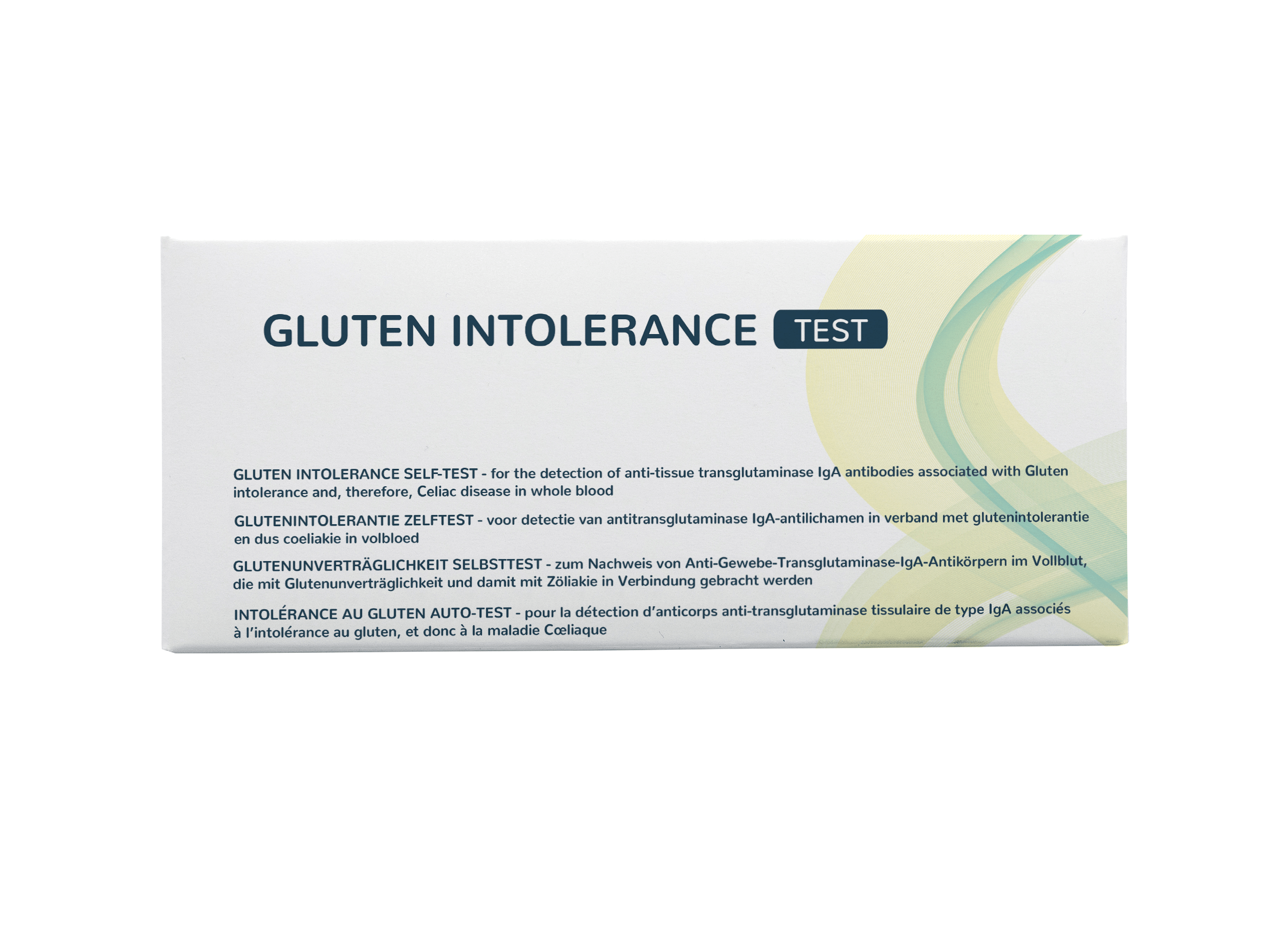
Gluten allergie test
€19.99


