


Everything you need to know about gluten intolerance and celiac disease
Gluten intolerance, also known as celiac disease, is a common condition in which the immune system overreacts to gluten, a protein found in wheat, rye and barley. This can lead to intestinal damage, digestive problems and nutrient deficiencies.
Many people wonder: do I have celiac disease or a gluten intolerance? How can I test for this? And what does a positive test result mean? In this guide, we answer the key questions about gluten intolerance and celiac disease, and how to test your own gluten reaction with a gluten allergy test.
1. What is gluten intolerance and celiac disease?
Gluten intolerance, or celiac disease, is a chronic autoimmune disease in which the body develops an inflammatory response in the small intestine when gluten is ingested. This damages intestinal villi, leading to poor nutrient absorption and various health conditions.
Not everyone who is sensitive to gluten has celiac disease. Some people have non-celiac gluten intolerance (NCGS), in which gluten causes symptoms without an autoimmune reaction.
2. What is the difference between celiac disease and gluten intolerance?
Celiac disease is an autoimmune disease, meaning the body attacks itself when gluten is eaten. This can cause permanent damage to the intestines.
Gluten intolerance (NCGS) also causes symptoms such as abdominal pain and fatigue, but there is no damage to the small intestine and no detectable autoimmune reaction.
A gluten allergy test can show whether there is celiac disease, but not non-celiac gluten intolerance.
3. What are the symptoms of celiac disease?
Symptoms of celiac disease vary from person to person, but the most common symptoms are:
- Intestinal complaints: Diarrhoea, constipation, bloating and flatulence.
- Fatigue: Chronic fatigue due to poor nutrient absorption.
- Weight loss: Unexplained weight loss due to poor digestion.
- Skin problems: Eczema or dermatitis herpetiformis, an itchy rash.
- Iron deficiency/anaemia: due to reduced absorption of iron and folic acid.
- Psychological complaints: Depressive feelings, mood swings and ‘brain fog’.
Long-term exposure to gluten in untreated celiac disease can lead to serious complications such as osteoporosis, infertility and neurological disorders.
4. How does the gluten allergy test work?
The gluten allergy test detects tTG-IgA antibodies in the blood, a key indicator of celiac disease. The test works simply in four steps:
- Sampling – Clean your finger with the alcohol gauze and prick with the lancet.
- Test execution – Apply two drops of blood to the test cassette.
- Add buffer solution – Add two drops of buffer solution.
- Read result – Results are visible within 10-15 minutes.
If the test is positive, it is important to contact a doctor for an official diagnosis and additional examination.
5. How reliable is a gluten allergy test?
The Tester’s gluten allergy test is clinically validated with a sensitivity of 97% and a specificity of 96%. This means the test is highly accurate and offers a high degree of reliability in detecting celiac disease.
Note: If you have been eating gluten-free for more than two months, the test may give a false-negative result. Your body may then no longer make tTG-IgA antibodies.
6. Can I take a gluten allergy test at home?
Yes, with The Tester’ s gluten allergy test, you can easily test at home whether you are producing antibodies to gluten. This saves a visit to the doctor and offers a quick indication of whether further testing is needed.
7. What do the test results mean?
- Positive: tTG-IgA antibodies were found. This indicates an increased risk of celiac disease. Medical follow-up is recommended.
- Negative: no tTG-IgA antibodies were found. This makes celiac disease unlikely, but does not rule it out completely.
- Invalid: The test was not performed correctly. Repeat the test with a new test kit.
8. Can I have celiac disease without symptoms?
Yes, some people with celiac disease have no noticeable symptoms. This is called silent celiac disease and can still cause damage to the small intestine.
9. What happens if I have untreated celiac disease?
Untreated celiac disease can lead to serious health problems, such as:
- Bowel cancer and other autoimmune diseases.
- Infertility and complications during pregnancy.
- Neurological disorders such as ataxia and peripheral neuropathy.
- Osteoporosis due to poor absorption of calcium and vitamin D.
10. What does a gluten-free diet look like?
A gluten-free diet means not eating wheat, barley and rye. This means you should avoid products such as bread, pasta and biscuits unless they are specifically gluten-free.
Many gluten-free alternatives are available, such as:
- Gluten-free bread and pasta.
- Rice, quinoa and buckwheat as grain substitutes.
- Vegetables, fruits, meat and dairy products without gluten.
11. Can celiac disease pass on its own?
No, celiac disease is a chronic illness and does not disappear on its own.
Conclusion
Celiac disease and gluten intolerance can have a big impact on your health. With a gluten allergy test, you can easily test whether you have antibodies to gluten and whether further investigation is needed.
Do you want certainty? Order your gluten allergy test today and get clarity on your health within 15 minutes!
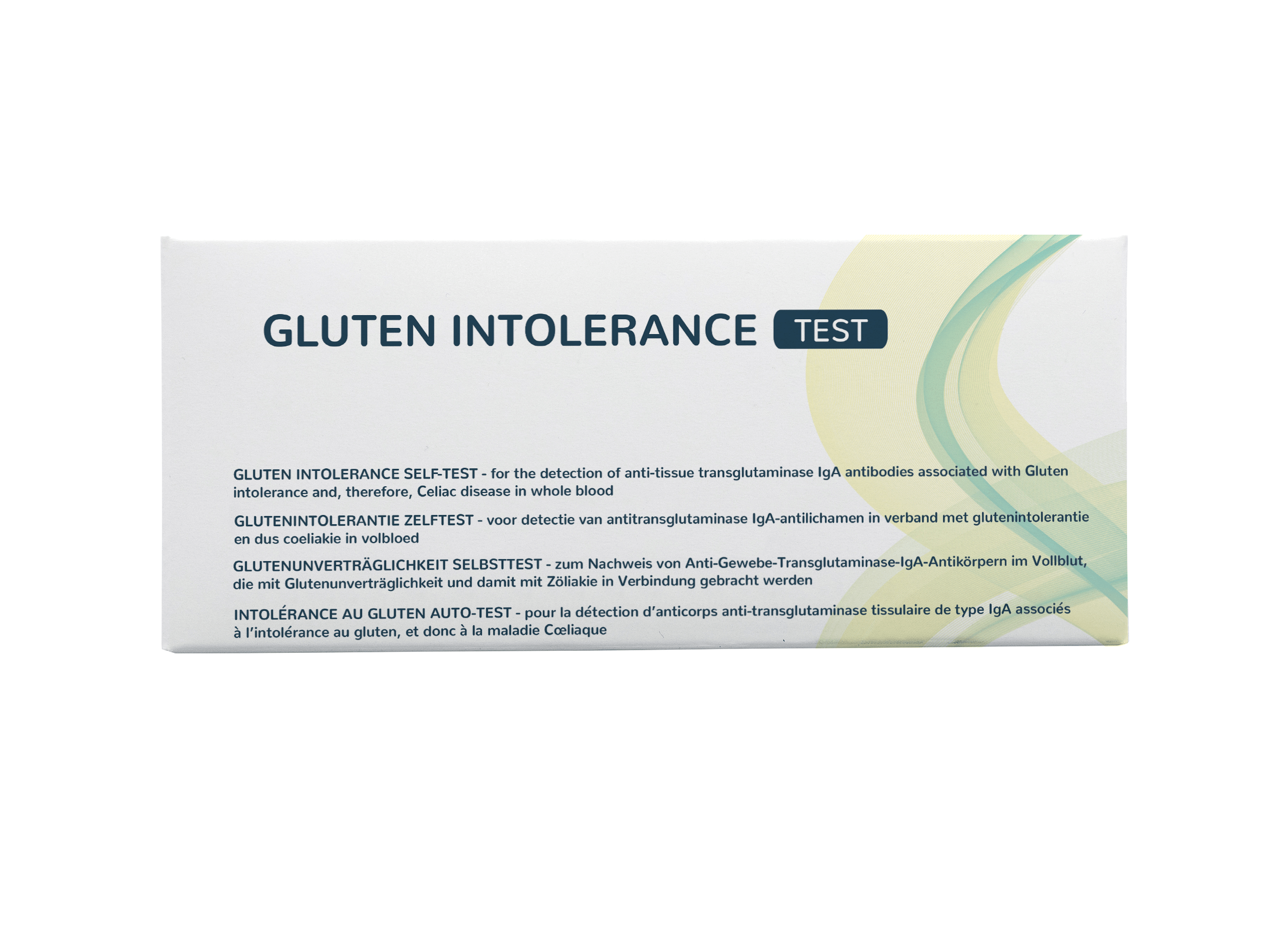
Gluten allergie test
€19.99


