


What are the symptoms of celiac disease?
Celiac disease is a chronic autoimmune disease in which the body does not tolerate gluten. In people with celiac disease, the intake of gluten causes an inflammatory reaction in the small intestine, which can lead to various health problems.
Symptoms of celiac disease can vary from person to person and range from mild to severe symptoms. Some people have obvious digestive problems, while others have no visible symptoms but suffer damage to their intestines.
Intestinal complaints in celiac disease
One of the most common features of celiac disease is digestive complaints. Inflammation in the small intestine affects nutrient absorption, which can lead to:
- Diarrhoea: Watery, frequent stools due to reduced nutrient absorption.
- Constipation: Constipation and bloating due to impaired bowel function.
- Abdominal pain and cramps: Often after eating gluten, due to inflammation in the intestinal wall.
- Bloating and flatulence: nutrients are not digested properly, leading to gas in the intestines.
- Fatty, smelly stools: Also called steatorrhoea, caused by poor fat absorption.
Not everyone with celiac disease experiences these intestinal symptoms. Some people have little or no digestive problems, but notice other symptoms.
Fatigue and nutrient deficiencies
Due to reduced nutrient absorption, people with celiac disease can suffer from chronic fatigue. This is because the body does not absorb essential vitamins and minerals properly, such as iron, folic acid and vitamin B12. Deficiencies can lead to:
- Anaemia: Iron deficiency can lead to pallor, dizziness and fatigue.
- Lack of energy: A lack of key nutrients makes one feel weak and lifeless.
- Poor concentration and ‘brain fog’: Problems with memory and focus due to deficiencies in B vitamins.
Skin problems as a symptom of celiac disease
Celiac disease can also cause skin complaints. One specific skin condition associated with celiac disease is dermatitis herpetiformis. This is an itchy, blistered rash that often occurs on:
- Elbows
- Knees
- Buttocks
- Back
This skin reaction is caused by immune responses to gluten. Not everyone with celiac disease develops dermatitis herpetiformis, but if it occurs, it is a clear indication of gluten intolerance.
Unexplained weight loss or weight gain
Untreated celiac disease can lead to unexplained weight loss, due to the body not absorbing enough nutrients. In some people, however, celiac disease can actually cause weight gain because the body processes nutrients incorrectly.
Neurological and psychological complaints
Celiac disease can not only cause physical symptoms, but also affect the brain and nervous system. Common symptoms include:
- Depression and anxiety: Possibly caused by inflammation and nutrient deficiencies.
- Tingling and numbness: nerve damage due to vitamin B12 deficiency.
- Headaches and migraines: Some people with celiac disease experience more frequent headaches and migraine attacks.
Celiac disease without symptoms
Not everyone with celiac disease has immediately noticeable symptoms. This is called silent celiac disease. Despite the lack of symptoms, damage to the small intestine can occur, which can cause long-term complications such as osteoporosis and infertility.
When should you get tested for celiac disease?
If you suffer from recurrent digestive problems, unexplained fatigue or skin problems, a gluten allergy test can provide insight into whether your body is producing tTG-IgA antibodies. This can be a first indication of celiac disease.
In case of a positive test result, it is important to consult a doctor for further diagnostics and a definitive diagnosis.
Conclusion
Celiac disease can manifest itself in different ways. The most common symptoms are intestinal complaints, fatigue, skin problems and neurological symptoms. Because symptoms can vary widely, celiac disease sometimes goes unnoticed for a long time.
Do you suffer from these symptoms and suspect celiac disease? If so, a gluten allergy test may be a first step towards clarifying the situation. If the result is positive, further medical tests are necessary.
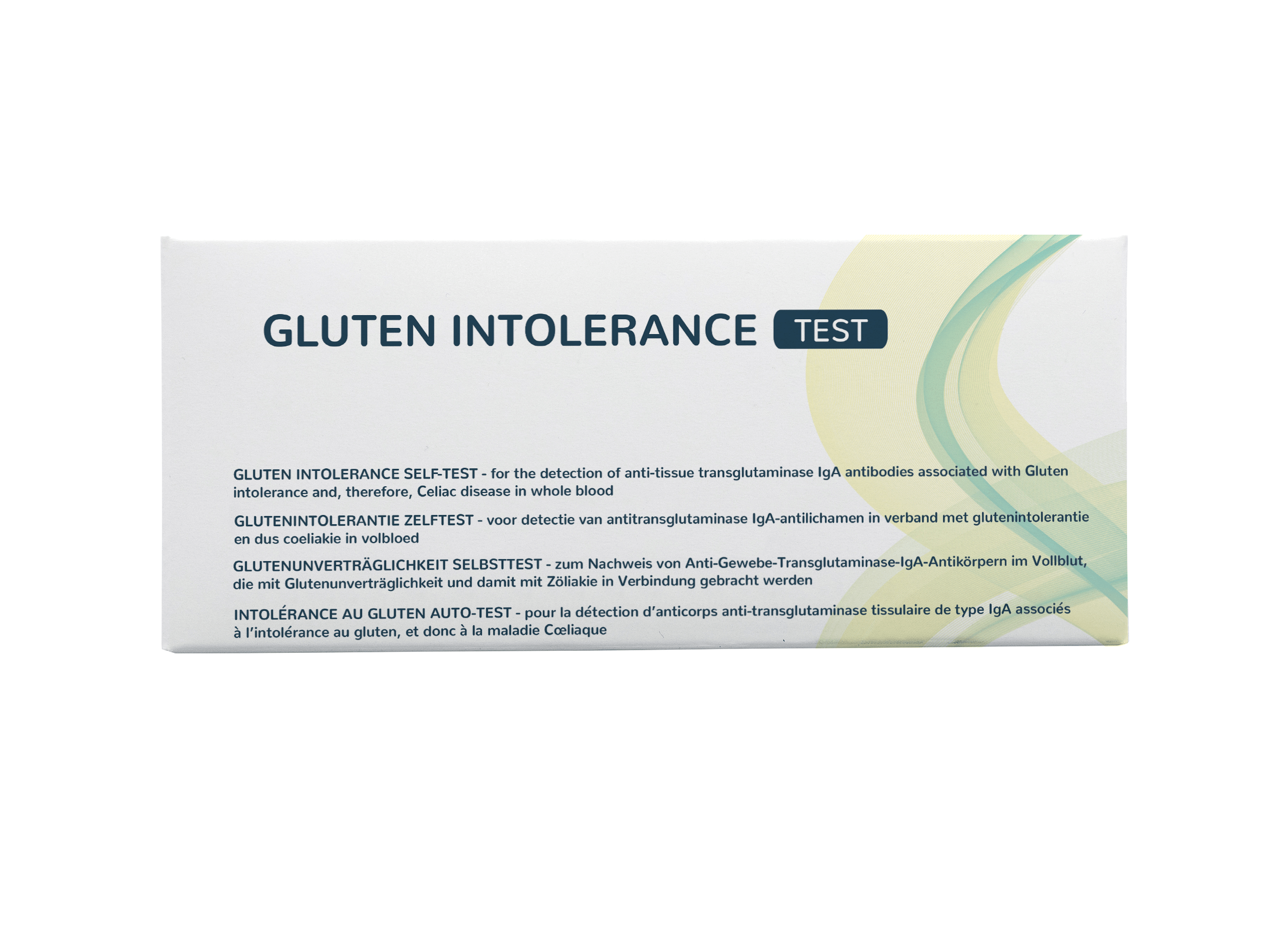
Gluten allergie test
€19.99


