

Diabetic Ketoacidosis: Warning Signs and How to Monitor Ketones at Home

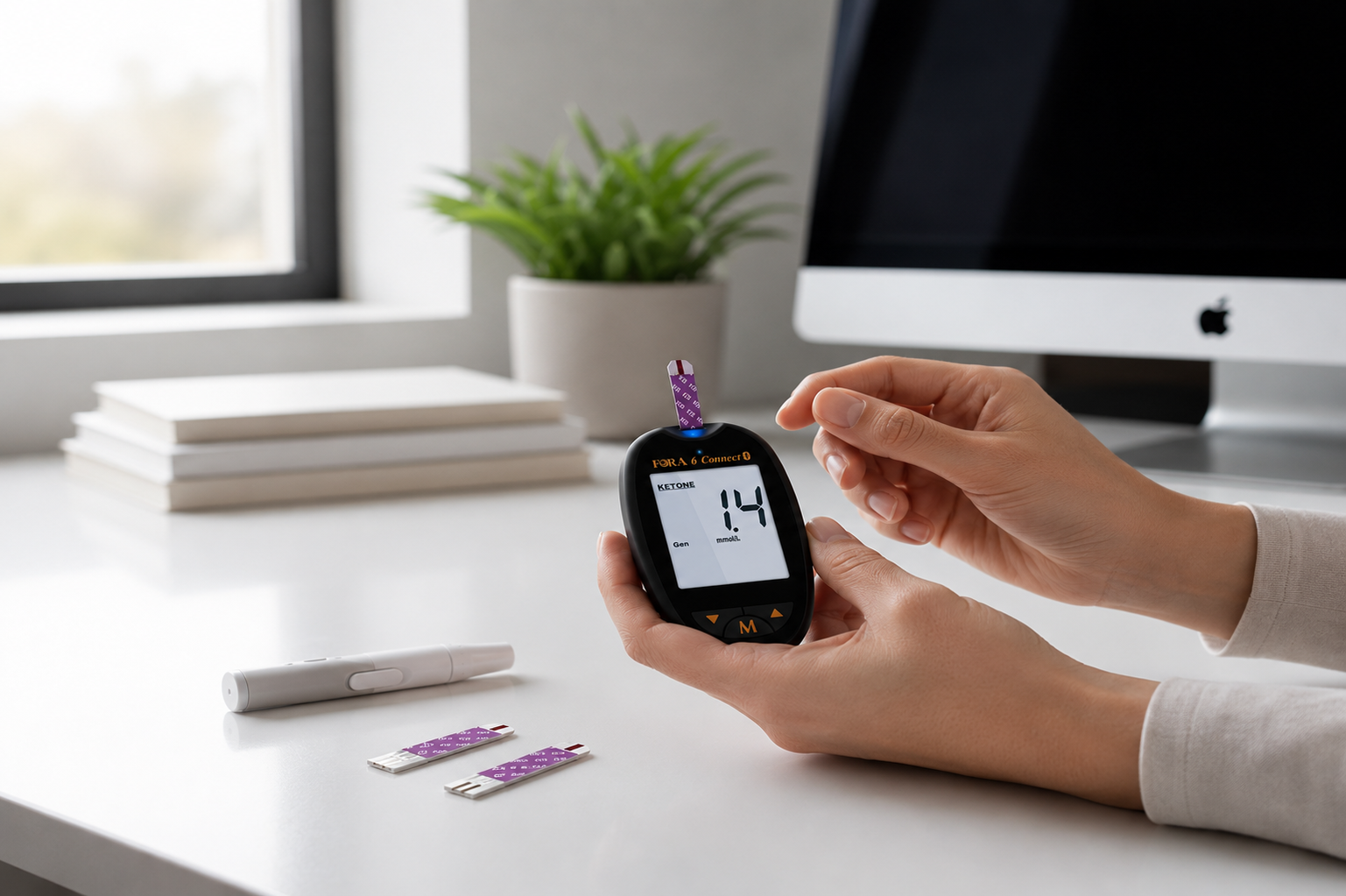

Your blood sugar has been running high for a few days, and now you’re feeling nauseous, exhausted, and your breath has a strange fruity smell. These could be diabetic ketoacidosis symptoms, and they demand immediate attention. Diabetic ketoacidosis (DKA) is a serious complication that develops when your body produces dangerously high levels of blood acids called ketones.
What Is Diabetic Ketoacidosis?
DKA happens when your body doesn’t have enough insulin to move glucose into your cells for energy. Without that fuel, your body starts breaking down fat at a rapid pace. This process produces ketones, which accumulate in the blood and make it acidic. Left untreated, DKA can lead to coma or death.
It’s most common in people with type 1 diabetes, but it can also occur in type 2 diabetes during illness, infection, or missed medication. According to the CDC, DKA accounts for more than 500,000 hospital days per year in the United States alone.
Recognising Diabetic Ketoacidosis Symptoms Early
DKA develops over hours to days. The earlier you catch it, the easier it is to manage. Watch for these warning signs:
Early symptoms (act within hours)
- Excessive thirst and dry mouth
- Frequent urination
- Blood sugar readings above 13.9 mmol/L (250 mg/dL)
- Moderate to high ketone levels on a blood test
Progressing symptoms (seek medical help)
- Nausea, vomiting, or stomach pain
- Fruity-smelling breath (caused by acetone, a type of ketone)
- Rapid, deep breathing (Kussmaul breathing)
- Confusion or difficulty concentrating
- Extreme fatigue and weakness
If you recognise several of these diabetic ketoacidosis symptoms together, especially high blood sugar plus nausea and fruity breath, test your ketone levels immediately or go to an emergency room.
How to Test Ketone Levels at Home
Blood ketone testing is the gold standard for DKA detection. Urine strips detect ketones too, but they reflect levels from hours ago. Blood meters show what’s happening right now.
The FORA 6 Connect Ketone Meter measures blood ketone levels (beta-hydroxybutyrate) with a simple finger prick. Results appear in about ten seconds.
How to interpret your ketone readings:
| Blood Ketone Level | Interpretation | Action |
|---|---|---|
| Below 0.6 mmol/L | Normal | No action needed |
| 0.6 – 1.5 mmol/L | Slightly elevated | Retest in 2 hours, drink water, check insulin dose |
| 1.5 – 3.0 mmol/L | High – DKA risk | Contact your doctor immediately |
| Above 3.0 mmol/L | Very high – medical emergency | Go to the emergency room |
Who Should Monitor Ketones Regularly?
Not everyone with diabetes needs daily ketone testing. But certain situations make it essential:
- You have type 1 diabetes (always keep ketone test strips at home)
- Your blood sugar has been above 13.9 mmol/L for more than a few hours
- You’re ill with a fever, flu, or infection
- You’re on an insulin pump (pump failures can cause rapid ketone buildup)
- You’re pregnant and have diabetes
Our Ketone and Blood Sugar Monitoring Products
| Product | What It Measures | Best For |
|---|---|---|
| FORA 6 Connect Ketone Meter | Blood ketones (beta-hydroxybutyrate) | DKA monitoring for type 1 diabetes |
| FORA 6 Beta-Ketone Test Strips (10 pcs) | Ketone test strip refills | Ongoing ketone monitoring |
| FORA 6 Connect Blood Glucose Meter | Blood glucose | Daily blood sugar tracking |
| FORA 6 Connect 6-in-1 Starter Pack | Glucose, cholesterol, ketones, uric acid, haematocrit, haemoglobin | Complete diabetes monitoring |
| FORA Connect CGM Starter Kit | Continuous glucose (14 days) | Real-time glucose tracking |
How to Prevent Diabetic Ketoacidosis
Prevention comes down to three things: consistent insulin use, regular blood sugar checks, and knowing when to test ketones.
During illness: Blood sugar often rises when you’re sick, even if you’re eating less. Never skip insulin during illness. Check blood sugar every two to four hours and test ketones if readings exceed 13.9 mmol/L.
Insulin pump users: Check your infusion site regularly. A kinked or disconnected cannula can stop insulin delivery without triggering an alarm. Keep pen needles or syringes as backup.
New diagnosis: DKA is sometimes the first sign of type 1 diabetes. If you or your child experience sudden weight loss, extreme thirst, and frequent urination, get tested urgently.
Frequently Asked Questions
What are the first diabetic ketoacidosis symptoms?
The earliest signs are excessive thirst, frequent urination, and blood sugar readings above 13.9 mmol/L. These can develop into nausea, stomach pain, and fruity-smelling breath within hours.
Can type 2 diabetes cause DKA?
Yes, though it’s less common. Type 2 DKA typically occurs during severe illness, infection, or when certain medications (like SGLT2 inhibitors) are used. Some cases present with only moderately elevated blood sugar, making ketone testing extra important.
How do I test for ketones at home?
Use a blood ketone meter like the FORA 6 Connect. Apply a small blood drop from a finger prick to the test strip. Results appear in about 10 seconds.
What is the difference between ketosis and ketoacidosis?
Ketosis is a normal metabolic state (blood ketones 0.5 to 3.0 mmol/L) that occurs during fasting or low-carb diets. Ketoacidosis is a dangerous condition where ketone levels exceed 3.0 mmol/L alongside high blood sugar and acidic blood. The distinction is critical: ketosis is controlled, ketoacidosis is not.
When should I go to the emergency room?
If your blood ketones are above 3.0 mmol/L, you’re vomiting and can’t keep fluids down, or you’re confused and disoriented, go to the emergency room immediately. DKA can become life-threatening within hours.
Don’t wait for diabetic ketoacidosis symptoms to catch you off guard. Keep FORA 6 ketone test strips at home and test whenever your blood sugar stays high. Early detection saves lives.


